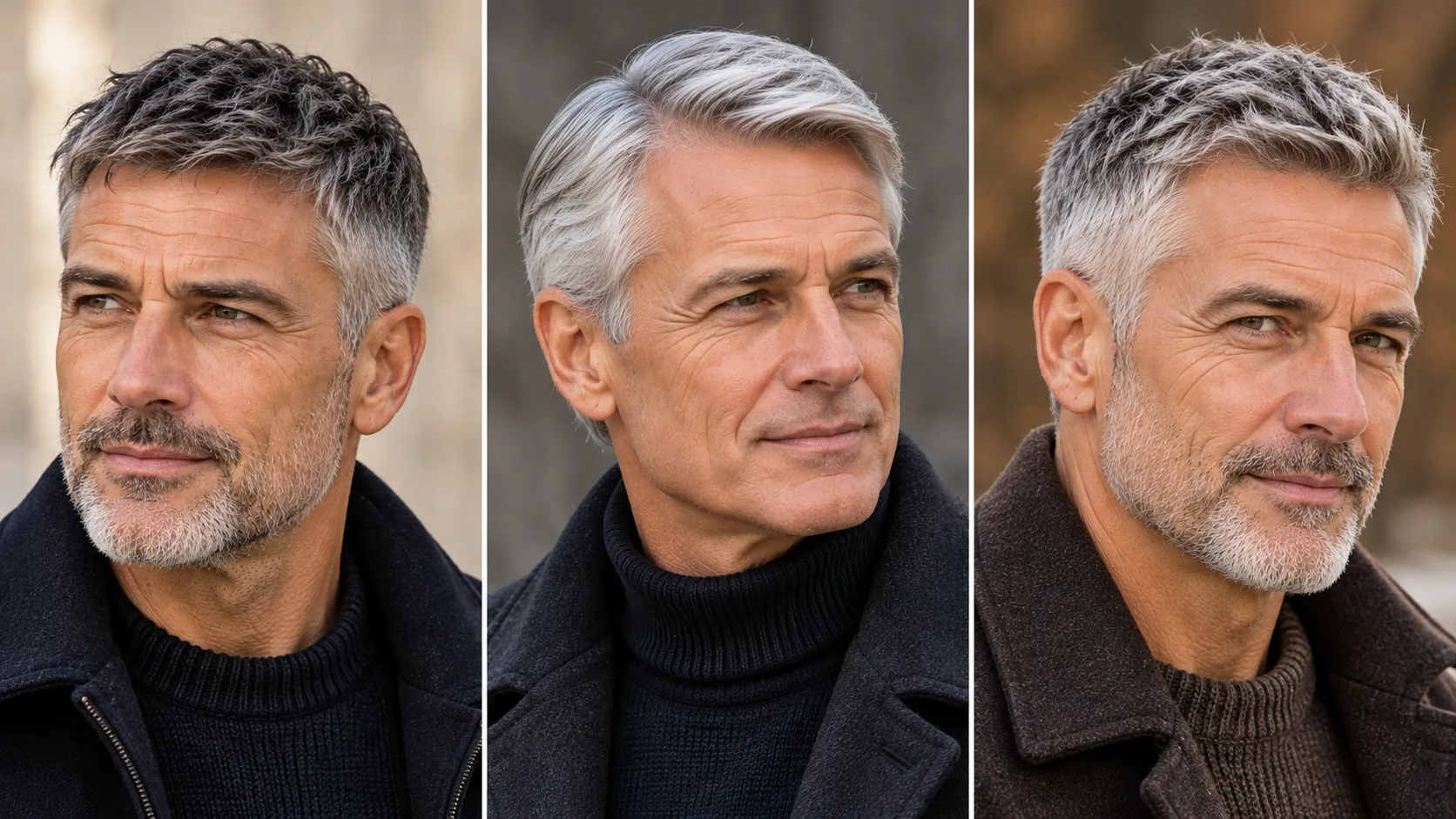
Winter can make keeping your hair in shape a little harder. You put on a beanie before heading outside, take it off later, and suddenly your hair looks flat, messy, or difficult to fix.
This can be even more frustrating if your hair is thinning, turning grey or losing some of its natural volume.
The good news is that you don’t need a complicated hairstyle to look well-groomed during colder months. The right haircut can make a big difference.
Shorter sides, natural texture and a balanced top can help your hair look neat even after wearing a winter hat.
These winter haircuts for men over 50 focus on comfort, easy styling and a natural appearance. You’ll find classic cuts, modern short styles and options for different hair types.
Some work especially well with beanies, while others are better for men who prefer wool caps or flat winter hats.
Let’s look at the styles worth asking your barber for.
1. Short Textured Crop With a Natural Finish
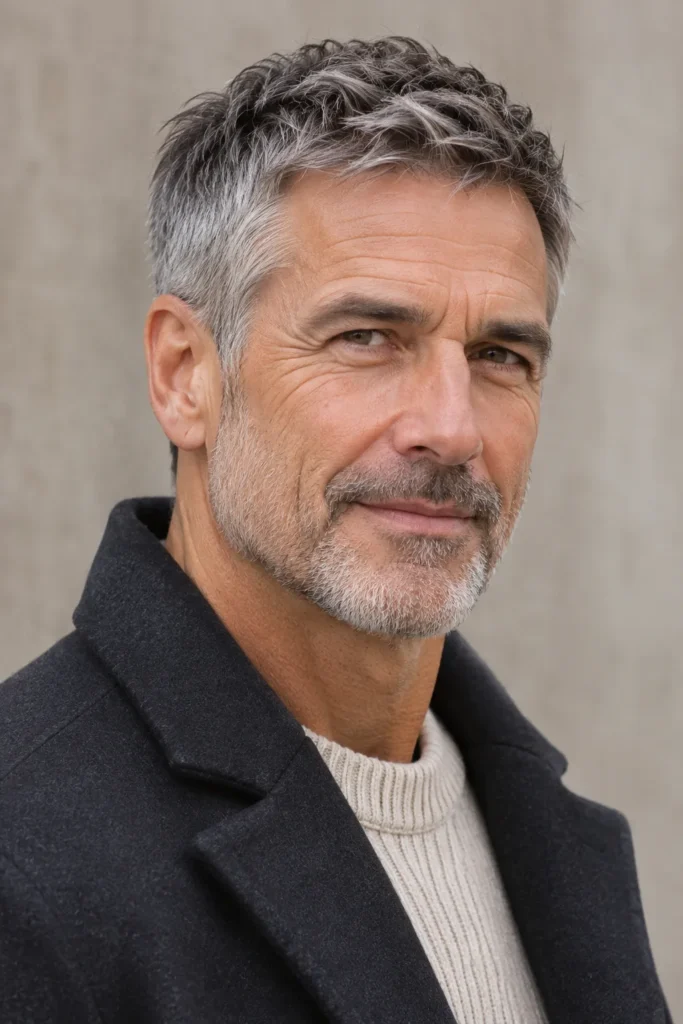
A textured crop is a good choice if your hair gets flat after wearing a winter hat. It keeps the top short enough to manage while small layers give the hair a little natural movement.
Ask your barber to keep the sides neat without making them too tight. The top should have short, uneven layers rather than a smooth, flat finish.
Why this cut works:
- Short length is easy to manage.
- Natural texture looks good without heavy styling.
- Works well with beanies and fitted wool caps.
Styling tip: Use a small amount of matte paste after removing your hat. Work it through with your fingertips instead of using a comb.
Quick Style Guide
2. Classic Crew Cut With Soft Grey Blending
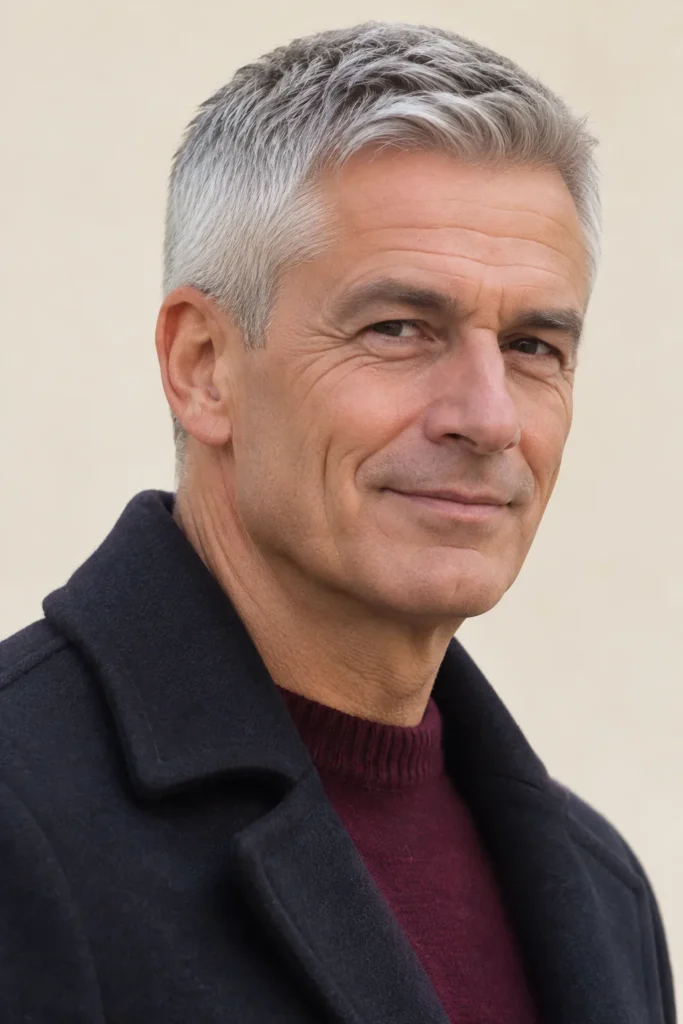
A crew cut gives you a clean appearance without asking much from your morning routine. It has shorter sides and a slightly longer top, which keeps the shape balanced.
For men over 50, a softer version often looks more natural than a very sharp military-style cut. Let your barber blend the grey hair around the temples instead of creating a harsh contrast.
A few details to ask for:
- Keep the sides short but not completely shaved.
- Leave a little length at the front.
- Blend the grey around the temples and neckline.
This cut works especially well under close-fitting winter caps because there is very little hair to flatten.
Quick Barber Tip
Ask for a soft crew cut with a slightly longer front. This gives you some styling choice without leaving too much hair under your hat.
3. Short Ivy League With a Gentle Side Part

Some men prefer a haircut that looks equally good with a winter coat and a casual sweater. The Ivy League offers that classic, well-kept appearance without needing a long top.
The hair is kept short at the sides and slightly longer on top, allowing a small side part. It can be brushed into place with your fingers after removing a hat.
Best details of this style:
- A gentle side part instead of a hard shaved line.
- Neatly tapered sides.
- Enough top length to follow the natural direction of your hair.
At a Glance
A small amount of lightweight styling cream is usually enough. Avoid heavy gel, which can make the hair look stiff.
4. Modern Caesar Cut for Thinning Hair
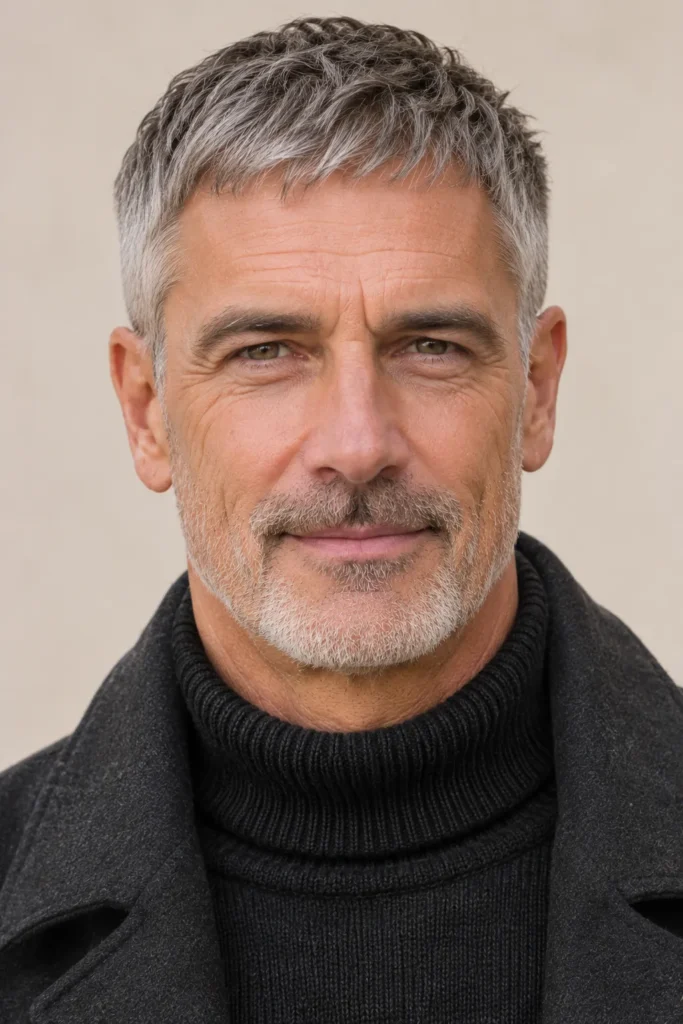
A thinning front hairline can make choosing a haircut difficult. The Caesar cut offers a practical option because the hair is kept short and brushed forward rather than pushed back.
Its short fringe creates a more even-looking front, while the sides remain neatly trimmed. It also avoids the need to build height at the crown.
Ask your barber for:
- A short, forward-facing fringe.
- Even texture across the top.
- Softly blended sides.
- A natural finish without sharp lines.
Before Your Barber Appointment
One useful point: a Caesar cut does not restore lost hair. It simply gives shorter hair a more controlled shape.
5. Low Taper With a Short Textured Top
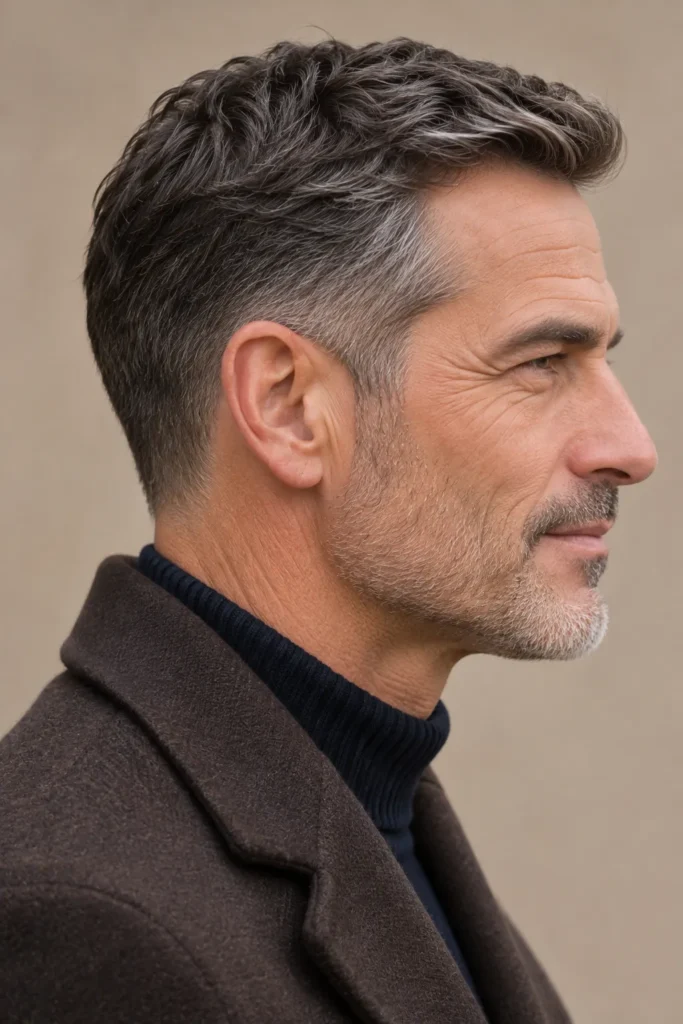
A low taper keeps the hair around the ears and neckline neat while leaving a little texture on top. The blend starts low, so the haircut does not look too sharp or overly young.
This is a good middle ground for men who want something more modern than a traditional short haircut but still prefer a mature appearance.
Do this: Keep the top short and lightly textured. Ask for a gradual blend around the lower sides and back.
Avoid this: A high skin fade with a tall, heavily styled top. It can create too much contrast and may lose its shape under a snug winter hat.
A low, gradual taper around the ears.
A short top with natural texture.
Very high fades with strong contrast.
Tall tops that need constant restyling.
6. Short Brushed-Forward Haircut
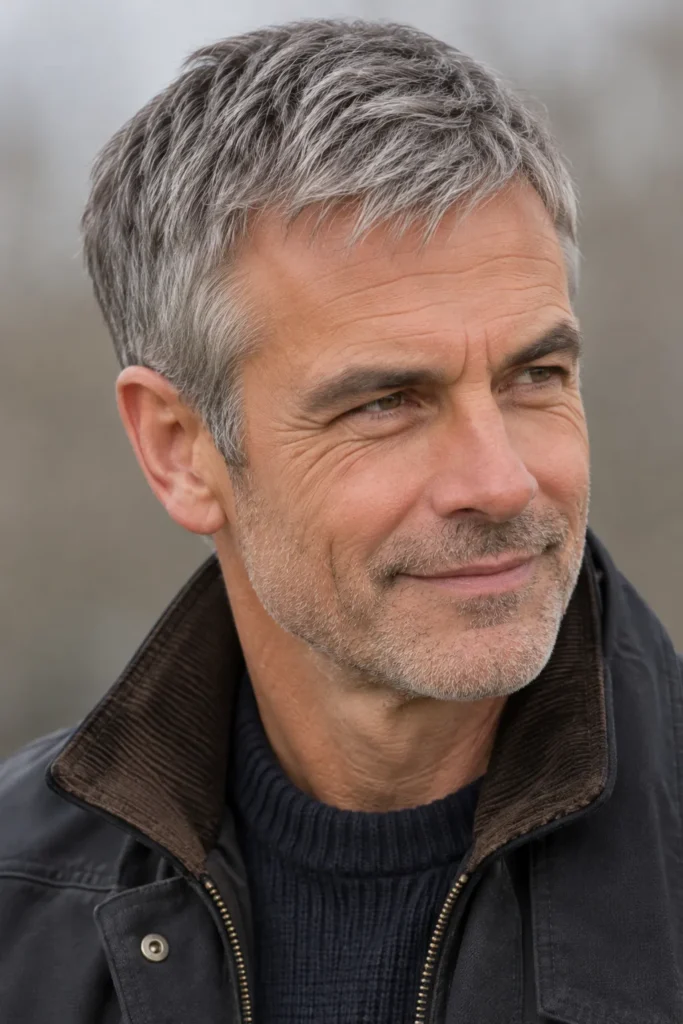
Hair that naturally falls forward can be easier to manage during winter. This haircut keeps the top short and directs it toward the forehead, so there is no need to restyle a tall front after removing a hat.
Ask your barber to use scissors on top and keep the sides neatly trimmed. A little extra texture at the front helps the hair look natural rather than flat.
How to style it after wearing a hat:
- Run your fingers through the front to loosen flattened sections.
- Use a little water if the hair has taken on a strange shape.
- Let it settle naturally instead of forcing it into place.
Keep the top short with a forward direction.
Choose a soft blend around the ears and neckline.
Finish with a small amount of lightweight styling cream.
This style is especially useful for men who prefer a simple haircut that does not need a mirror every time they take off their cap.
7. Classic Short Side Part With Natural Grey Hair

Grey hair can look especially good in a classic side-part haircut. The clean shape gives silver and salt-and-pepper hair a neat appearance without hiding its natural color.
The key is to keep the part soft. A deep, sharply shaved line can look too formal for everyday winter wear. Ask your barber to follow your natural parting and leave enough length on top to brush the hair gently to one side.
A few styling details:
- Keep the sides short with a gradual blend.
- Leave moderate length on top.
- Use a light cream instead of stiff gel.
- Avoid building too much height near the front.
Hair falls in different directions, and the grey color can look less defined.
The top follows one direction, while the sides give the haircut a clean outline.
A soft side part also makes it easier to bring the hair back into place with your fingers after wearing a wool cap.
8. Short Wavy Hair With a Soft Taper
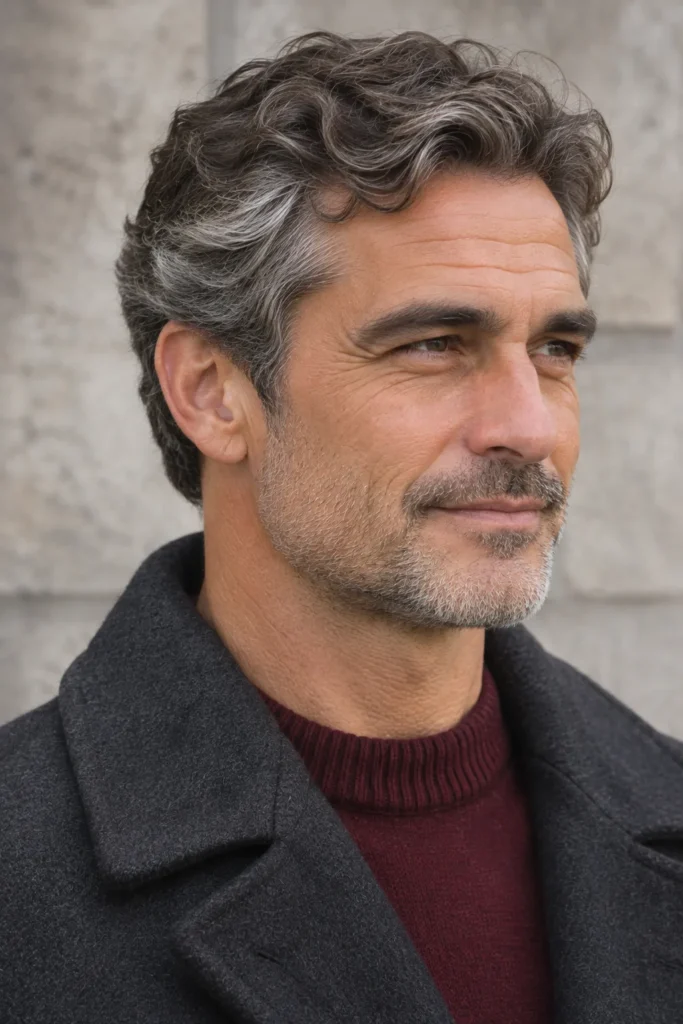
Natural waves can give a short haircut plenty of character, even when the hair is not styled. Rather than cutting the waves away, keep a little length on top and let them form their own shape.
The sides should be tapered gently to avoid excess bulk around the ears. This matters in winter because thicker hair can bunch up under a tight beanie.
Which version should you choose?
| Hair Type | Best Cut |
|---|---|
| Loose waves | Short layered top |
| Thick waves | Soft tapered sides |
| Fine waves | Short, lightly textured top |
Use a lightweight styling cream if the waves look dry or lose their shape. Avoid heavy wax, which can make the hair feel greasy beneath a hat.
9. Even Buzz Cut for a Clean Winter Look

Some men would rather skip styling altogether. An even buzz cut makes that possible. The hair is clipped to a similar short length across the head, giving it a simple and balanced appearance.
It also works well with most close-fitting winter hats because there is very little hair to flatten or push out of place.
What to tell your barber:
- Choose a clipper guard length that suits your hair density.
- Keep the length even across the top and sides.
- Ask for a neat neckline and around the ears.
A buzz cut removes the need to fix flattened hair. Take off your hat, and your haircut is already in place.
One thing to consider: a buzz cut exposes more of your scalp. If your scalp gets dry in cold weather, use a gentle moisturizer and protect your head outdoors.
10. Short Curly Top With Neat Sides
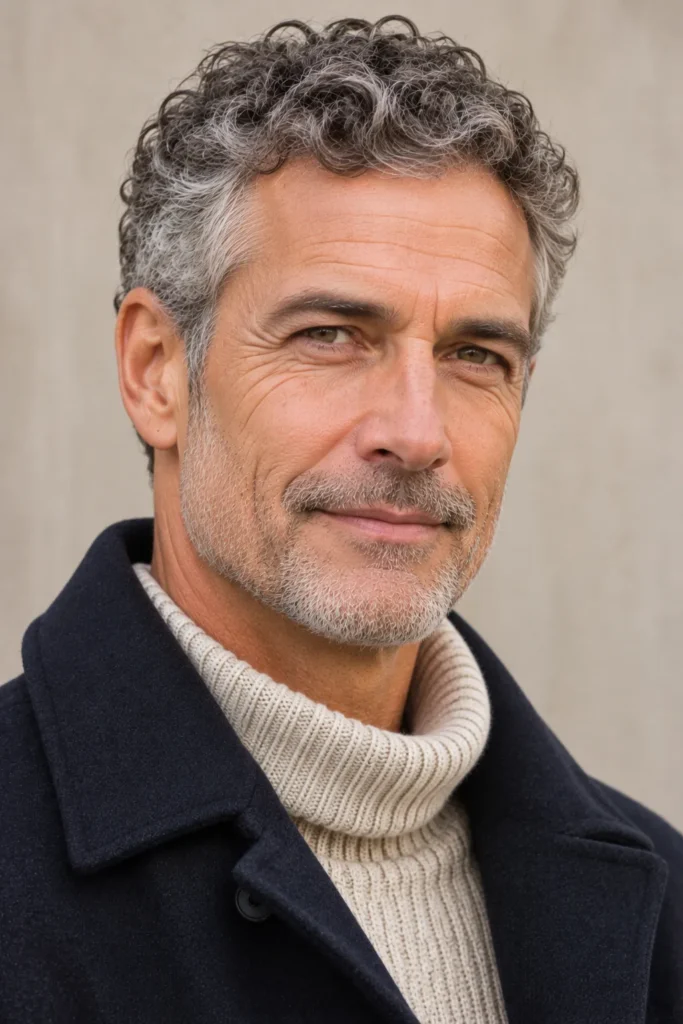
Curly hair does not have to be long to look good. A short curly top keeps the natural curl pattern visible while neatly trimmed sides prevent the haircut from becoming too wide.
For men over 50, this can be a nice way to keep natural texture without spending much time in front of the mirror.
Ask your barber to:
- Keep enough length for the curls to form.
- Remove extra bulk around the temples.
- Blend the sides without cutting them too close.
- Shape the top according to your natural curl pattern.
Good To Know
Curly hair can become compressed under a tight hat. Choose a cap with enough room for your curls, and avoid pulling it down too firmly.
After removing your hat, gently lift the curls with your fingertips. A little leave-in conditioner can help if your hair tends to feel dry during winter.
11. Low-Volume Textured Quiff
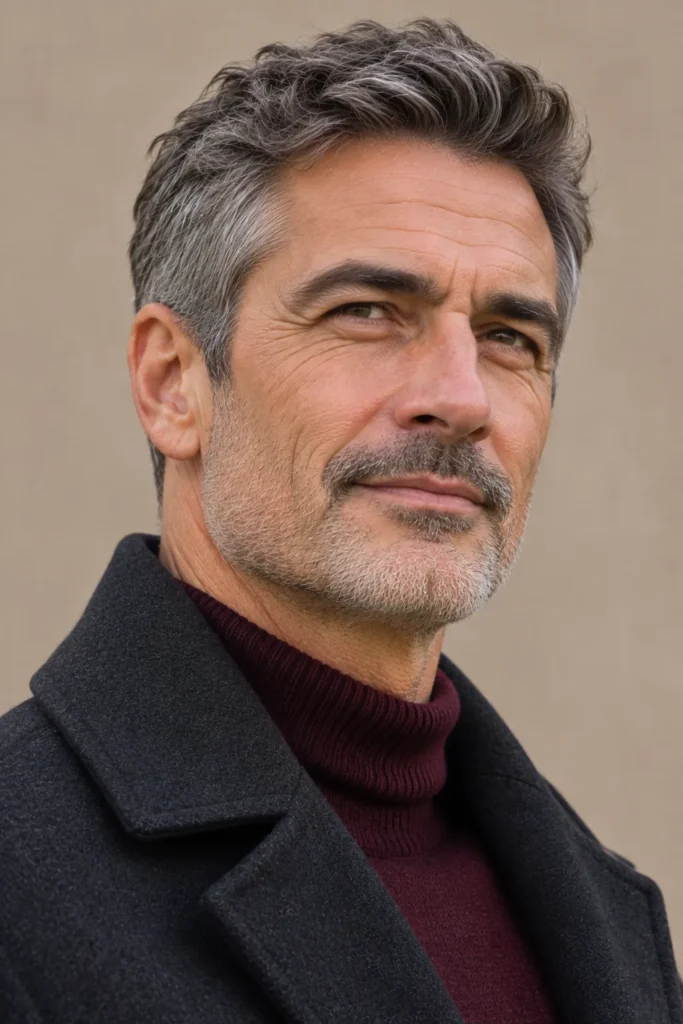
A traditional quiff often has a lot of height at the front, which can be difficult to maintain during winter. A low-volume version gives you a similar shape without making the hair too tall.
Keep the sides short and leave moderate length on top. The front should have a slight lift rather than a dramatic wave. This makes it easier to bring the hair back into shape after wearing a beanie.
What makes this version different:
- Less height at the front.
- Soft texture instead of a stiff finish.
- Shorter sides for a balanced shape.
Styling tip: Use a small amount of matte styling cream and push the front slightly upward with your fingers. Avoid strong-hold gel if you plan to wear a hat.
12. Short Receding Hairline Haircut
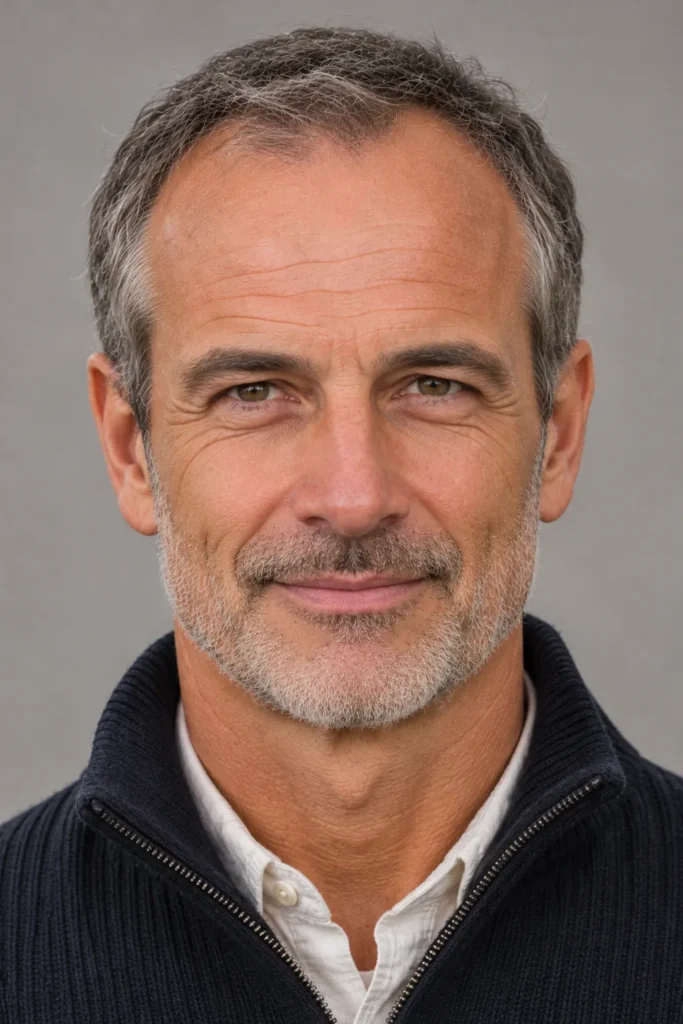
A receding hairline does not mean you have to choose a buzz cut. A short, well-shaped haircut can work with your natural hairline and give the overall style a balanced appearance.
Keep the top relatively short and avoid combing the hair far across the forehead. A little natural texture can help the front blend with the rest of the haircut.
Ask your barber for:
- A short top that follows your natural hair growth.
- Softly tapered sides.
- A natural front edge without an artificial-looking hairline.
- A neat neckline that suits your head shape.
Before Choosing This Cut
This cut is easy to manage under a winter hat because it does not rely on a carefully raised front.
13. Soft Scissor Cut With a Natural Shape
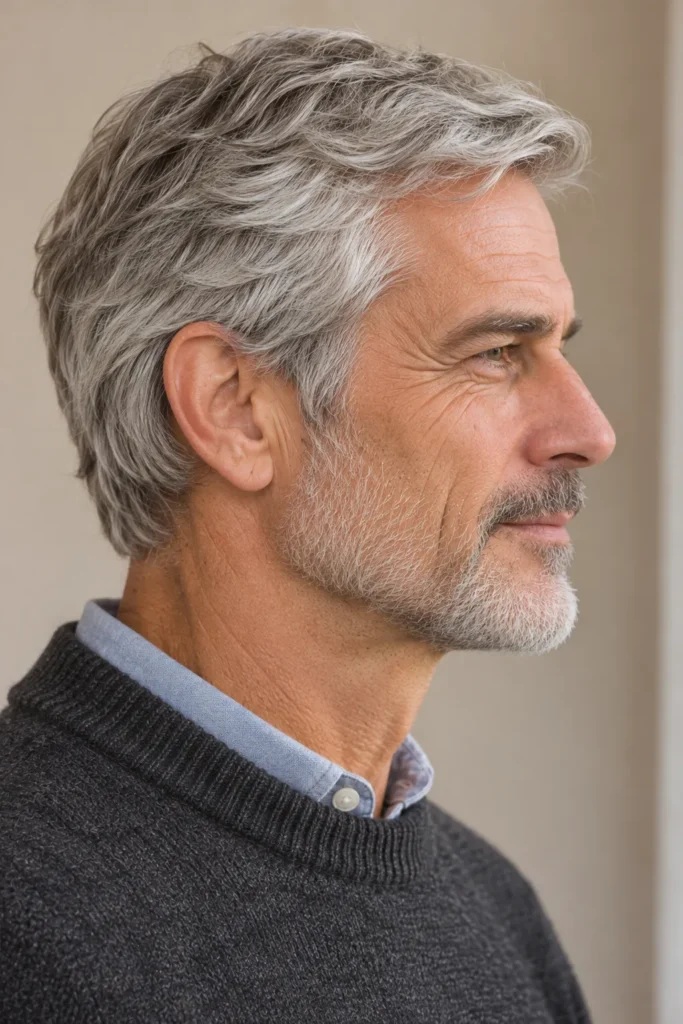
Not every man wants a sharp fade or a haircut that looks freshly clipped. A soft scissor cut offers a more relaxed option with natural edges and gentle layers.
The barber uses scissors to shape most of the hair, keeping the sides and top in balance. This can work especially well for men with medium-density, straight or slightly wavy hair.
Why consider it?
- The sides do not look overly short.
- The top keeps a natural shape.
- There are no strong lines that need frequent touch-ups.
- It suits both casual and smart winter clothing.
Keep the sides naturally blended.
Let the top follow your hair’s natural direction.
Leaving too much bulk around the ears.
Using heavy products that flatten the layers.
A soft scissor cut is worth considering if you prefer a haircut that looks natural rather than sharply styled.
14. Short Brushed-Back Hair With Minimal Volume
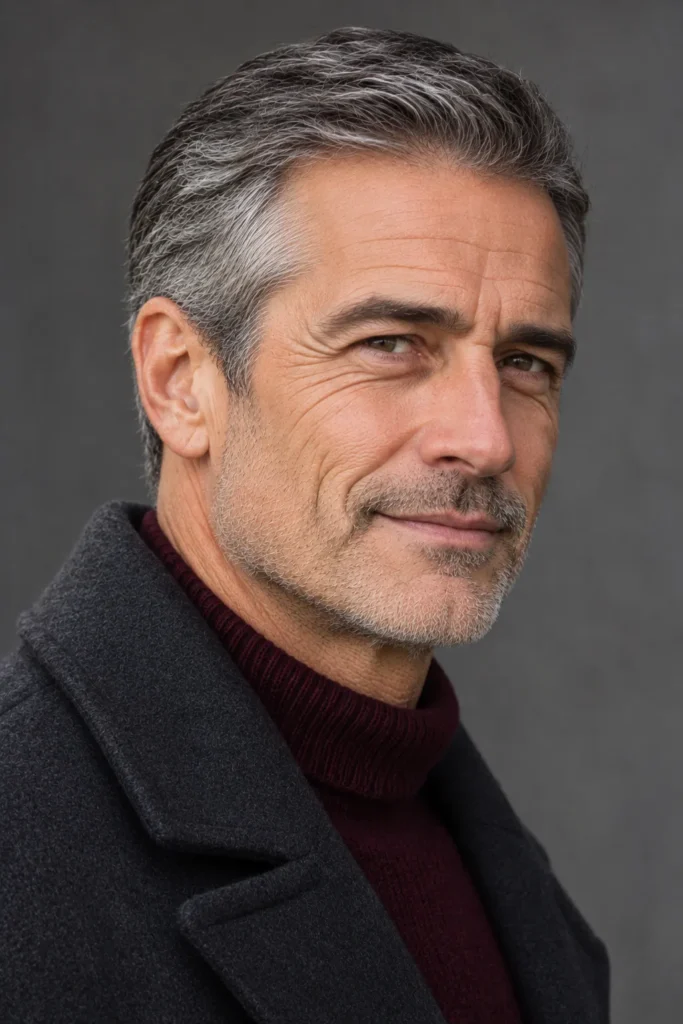
Brushed-back hair has a classic look, but a tall, slicked-back style can lose its shape under a winter hat. The shorter version keeps the hair close to the head while still giving it a tidy direction.
Ask your barber to leave enough length on top to brush it backward without creating a high front. The sides should be short but not too tight.
A simple styling routine:
- Start with slightly damp hair.
- Brush it gently backward.
- Apply a small amount of lightweight cream.
- Let the hair settle instead of forcing a glossy finish.
- ▸Best with a soft, low-profile beanie.
- ▸Works well with straight or slightly wavy hair.
- ▸Keep the finish natural rather than wet or shiny.
If your hair is very thin at the front, a forward or side-directed style may be easier to maintain than brushing everything backward.
15. Natural Silver Taper With a Clean Neckline
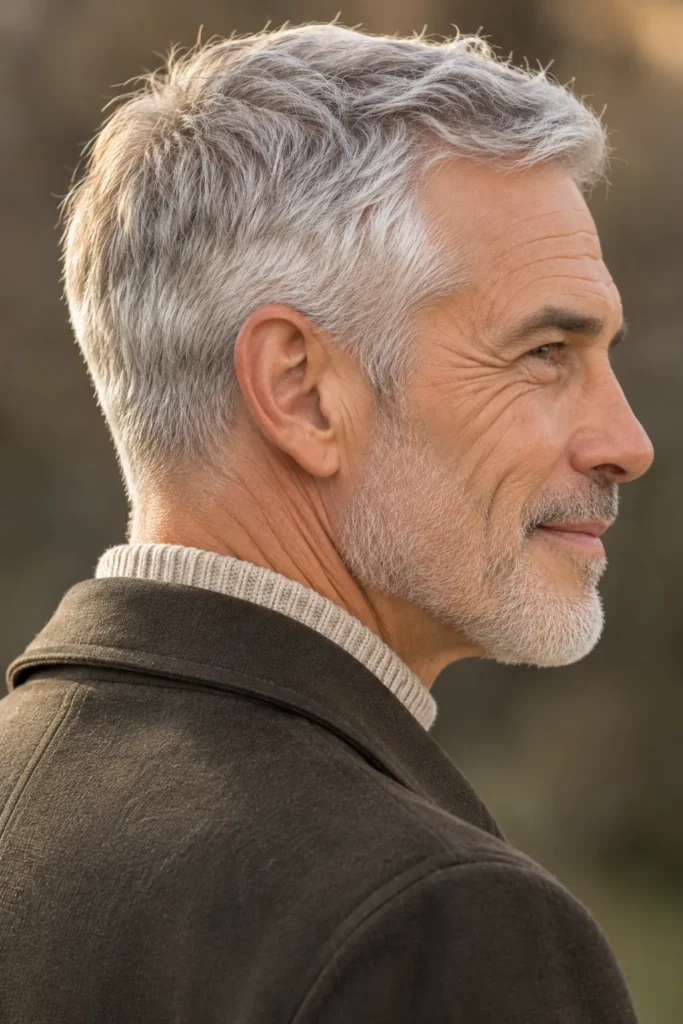
Natural silver hair deserves a haircut that shows its color and texture. A silver taper keeps the sides and neckline neat while leaving enough length on top for a soft, natural finish.
Unlike a very sharp fade, this version uses a gradual blend. It gives the haircut a clean outline without making the sides look too bare.
Details worth asking for:
- A gentle taper around the ears.
- A clean neckline.
- A short, naturally shaped top.
- A soft blend that works with your natural grey pattern.
A little lightweight cream is enough to keep the top in place. The goal is to show the natural silver hair, not cover it with heavy styling products.
Final Thoughts
Finding a winter haircut after 50 does not have to be difficult. The best choice is one that works with your natural hair type, feels comfortable under a hat and takes little effort to fix afterward. Short textured crops, classic crew cuts and soft tapers are all worth considering if you prefer a neat, low-maintenance look.
Before visiting your barber, think about your hair thickness, natural growth pattern and the hats you wear most often. A small change in length or shape can make your daily routine easier.
Save this list to your Pinterest board so you have a few haircut ideas ready for your next barber appointment.